
Wood vs Plastic Playhouse
Posted by SwingSetMall on 17th Jun 2026
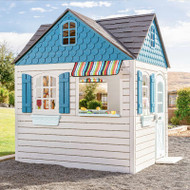
Picking between a wood vs plastic playhouse comes down to a few simple choices:
- What are you willing to spend?
- How much work are you looking to dedicate to it?
- What do you want it to look like in your yard?
Just like in the plastic vs wood swing sets debate, there are some trade-offs here. Wood looks beautiful and taking the DIY approach gives you room for customization. But it’s a ton of work, super expensive, and requires constant maintenance.
On the other hand, a plastic outdoor playhouse is a simple purchase that just gets placed in your yard - it costs less in the long run and doesn’t really need maintenance outside of some occasional cleaning. It’s the smarter pick for most families. Learn more below.
Key Takeaways
- Plastic playhouses need zero maintenance and are ready to play in as soon as they’re delivered. Best for younger kids.
- Wood costs more upfront, but looks beautiful. You can get 10+ years of use out of it. Room for older kids, and a structure you can paint, expand, and modify over time.
- Swing Set Mall is your one-stop shop for all things outdoor play. We carry complete playhouses, swing sets, and more to make your backyard playground vision a reality.
Pros and Cons of Plastic Playhouses
We’ll start with our simple recommendation - most people should go with plastic. It’s more affordable, easier to get kids playing right away, and doesn’t take much work over the years. You get bright colors, it effortlessly snaps together after being delivered, and it can cost less than $1,000 all in.
Pros
- Zero maintenance: You will never stain this thing, seal it, or sand it. Spray it with the hose every so often to keep it looking pretty. That’s it. The material won’t rot or splinter. You’re busy - you don't need another project. This is the deciding factor between a plastic vs wood playhouse for a lot of families.
- Lower price point (starting at $150): Lifetime and other premium brands can definitely be more expensive, but even those cost less than comparable wood structures quite a bit. This makes a lot more sense if you're not sure your kids will use the playhouse for more than a few years.
- Fast assembly: Snap the panels together and maybe tighten a handful of screws. One adult can have the whole thing up without any power tools in an hour or two at most. A wood kit takes an entire weekend by comparison.
- Safety: Toddlers bump into things constantly, and a plastic playhouse is about as forgiving as outdoor play equipment gets for the 2-4 age range. Molded surfaces with no sharp corners or exposed hardware.
Cons
- Permanent UV fading: Sunlight breaks down the pigment in molded plastic over a few summers. Colors wash out and surfaces turn chalky. Unlike wood, you can't sand it down and apply a fresh coat.
- Kids outgrow them: Low ceilings and narrow doorways mean most plastic playhouses have an expiration date - usually kids under six. The playhouse will feel like a toy they’ve outgrown by the time they hit 7-8 years old.
- Light enough to move in wind: They’re portable, and that’s great - but it also means really strong winds can send a plastic playhouse sliding or tipping across the yard if they’re not anchored in place.
Pros and Cons of Wood Playhouses
Wood costs more and takes a ton of effort to build and keep up. But you get a structure that looks like it belongs in the yard, survives a decade, and lets you modify it to match whatever your kids dream up next.
Pros
- Built to last: Cedar and redwood playhouses hold up for 10-15 years if you give them the care they need. You buy one wood playhouse, and your kids grow up with it. It’s a long-term investment.
- Looks like an actual building: The grain, texture, and visual weight of a wood playhouse bring an incredible aesthetic to your backyard. Like it was always supposed to be there. You can stain it to match your deck or paint it to complement your house. Let it weather to silver-gray if that's the look you want. The possibilities are endless!
- Fully customizable: Beyond the appearance itself, you can truly make this structure whatever you want it to be. Add shutters, a front porch, or a loft with a slide exit. Start simple, then expand the playhouse as your kids find out exactly what they want from it.
- Stays put: A wood playhouse is heavy, bolted together, and (if done right) anchored to the ground. Plastic can’t compete with this level of stability.
Cons
- Maintenance isn’t optional: Stain or seal every 1-2 years, depending on your climate and the wood species you go with. Otherwise, you’re risking rot, warping, and insect damage. Cedar naturally resists decay but still needs some TLC. Pine needs even more.
- More expensive: Expect to spend anywhere from $500 at the lowest possible end, all the way up to $2,500-$5,000. Custom builds cost a lot more than kits. Either way, wood is much more than plastic, and that’s not accounting for lifetime maintenance.
- Weekend assembly project: Plan for a full Saturday and Sunday on most kits. Bigger models need two adults and some basic carpentry skills. You have to be realistic with yourself about your abilities.
- Splinter potential: Unsanded/unsealed wood will splinter. Proper finishing eliminates the risk, but it's yet another step in the maintenance cycle. The last thing you want is kids to get hurt using your playhouse.
Wood vs Plastic Playhouse: Which is Right For Your Kids?
You might already be leaning one way or another between a wood vs plastic playhouse. Just as with all types of playground equipment, you need to think about a few things:
- Appearance
- Cost
- Safety
- Customization
- Durability
See how the plastic vs wood playhouse stack up side-by-side below.
Aesthetics
This is a matter of personal preference, at least to some extent. Most people will feel as if wood wins the wood vs plastic playhouse debate on looks alone, and a lot of that comes down to how it actually looks like a real structure.
You pick the stain color. You get to choose whether to add trim, shutters, window boxes. A wood playhouse can match your home or stand out as a feature in the landscaping.
In contrast, plastic playhouses look like what they are - toys. They come in whatever colors and shapes the mold allows. That’s totally fine for a designated play corner. But it might not win you any awards in Architectural Digest.
All-in Cost
This is where the other half of the wood vs plastic playhouse debate has its edge. Plastic wins on sticker price and it’s not even close. You can spend as little as $150 for a complete structure. Even the premium plastic playhouses we carry are only $1,000ish, and that’s for a massive structure crafted from HDFPE plastic that’s built to last, and loaded with fun features.
In comparison, wood costs $500-$5,000+ just for the structure itself. Stain is another $30-$60 every couple of years on top of that. A $1,000 wood playhouse will actually cost around $1,200-$1,400 over 10 years.
Yeah, more expensive in the long run. But you’re getting a lot more use out of it in many cases. Wood might end up being the better value for the money.
Safety
Be clear, both are safe when made the right way. But we think plastic has the edge for very young kids. Molded corners, smooth surfaces, no fasteners to bump.
On the other hand, wood wins on structural safety. Heavier frames resist tipping. Anchored playhouses don't shift under use or weather. There’s the splinter risk, sure - but you can sand the wood and give it a good seal to eliminate that concern.
Customization
Wood gives you a world of possibilities. Paint it, expand it, add a second story. Mount a mailbox, install real windows, attach a climbing wall to the exterior. Wood can be modified pretty much however you see fit. The playhouse grows and changes alongside your kids.
Pretty much what you see is what you get with plastic. Some models offer small clip-on accessories, but you can’t really change anything structurally. That’s why most come with everything your kids need for maximum enjoyment. For example:
- Windows
- Play sink and stove
- Mail slots
- Toy food, pans, and utensils
- And more
Durability
You could make the case for either the wood vs plastic playhouse in this case.
Plastic holds up with zero work. You really don’t have to maintain anything, other than a little cleaning here and there. Usually, we see kids outgrow the playhouse before the playhouse itself is no longer usable.
There’s no way around it, wood needs regular care. Staining, sealing, and occasional hardware checks. You get out what you put in, though. Cedar and redwood can last 10-15+ years. This is a structure that will still be on the property when you go to sell it one day.
Parting Thoughts on the Plastic vs Wood Playhouse
The plastic vs wood playhouse question isn't about which material is universally better. But there’s likely one glaringly obvious pick for you and your family right now.
Toddler and a tight budget? Plastic does the job without any upkeep. Building a play area you want standing for the next decade? Wood might be worth the work and investment.
Swing Set Mall stocks playhouses and the full range of equipment to build out a backyard play area. Check out our backyard playground ideas for layout inspiration, browse our backyard toys and outdoor playset collections, or just reach out.
We’ll help you create a space that entertains kids for years to come!
Frequently Asked Questions
Is a plastic or wooden playhouse better?
Plastic is the practical pick when you have small kids and a tight budget. Wood makes more sense if you're planning for the long haul. The plastic vs wood playhouse answer is really about how many years you expect to use it for.
What is the best material for an outdoor playhouse?
Cedar is naturally rot-resistant, holds stain well, and lasts decades without aggressive chemical treatment. HDPE (high-density polyethylene) is the strongest type of plastic for a playhouse if you want something entirely maintenance-free.
Is it cheaper to build a playhouse or buy one?
Usually, buying a kit saves money. A custom build runs $1,000-$3,000+ in raw materials before accounting for your time and tools. Kits start lower and include everything down to the fasteners. Unless you have a very specific custom vision, we recommend going with a kit.